
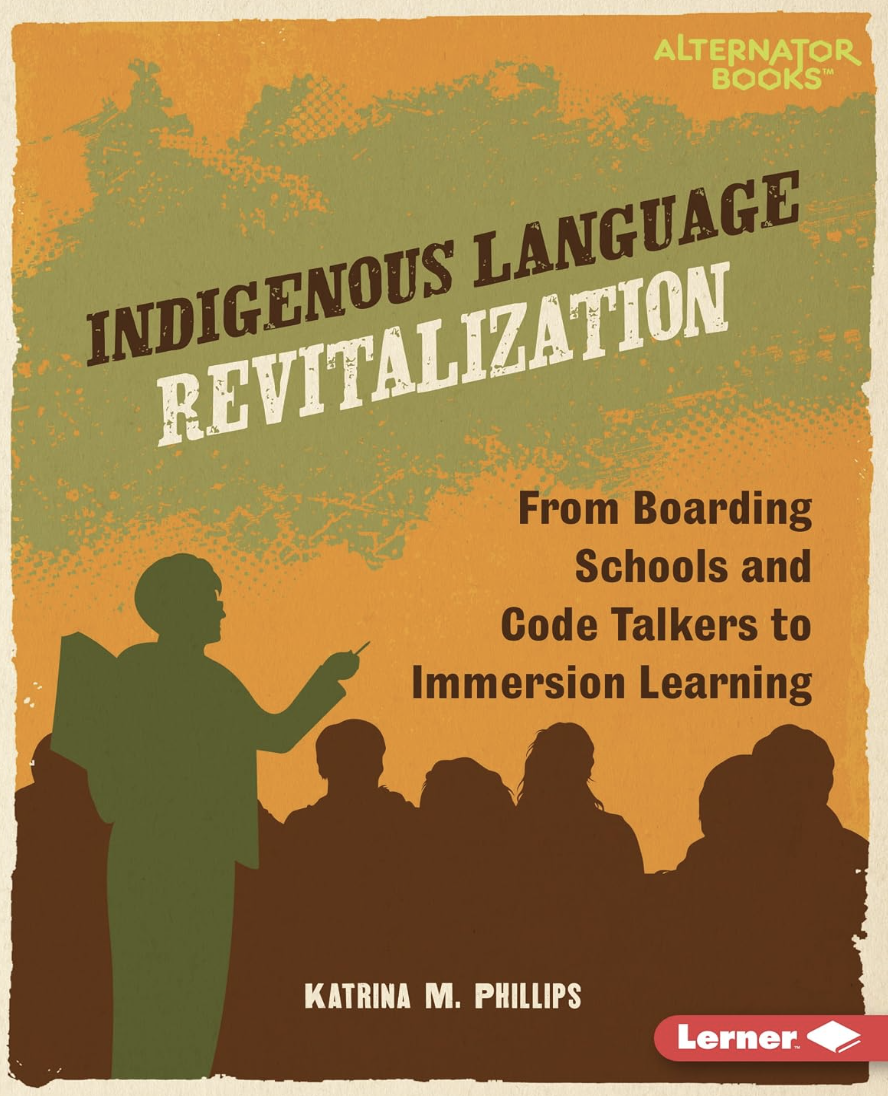
By Katrina M. Phillips
Publication Date: 2025
Joy for Books Review Score: 91%
Description from Bookshop.org: Indigenous languages have a mixed history in the United States. Many Native languages have become endangered. In the 1800s, the US government began forcing Native children to attend federal Indian boarding schools. There, children were punished for speaking anything other than English. But during the two World Wars, the US military asked Native American soldiers to create unbreakable codes in their Native languages. Indigenous languages help explain cultural practices, keep ceremonies alive, and teach Indigenous peoples about their histories and their ways of life. Today, Indigenous nations use immersion camps and schools to revitalize their languages.
Joy for Books reviewer comments: "This is a type of non-fiction history text for young readers. The subject is Native American History and specifically the revitalization of indigenous languages after hundreds of years of loss through colonization. It is written at an appropriate level of understanding but warrants support on the topic from a teacher. It is interesting, has sad parts but ends hopeful with what is being done now to preserve their languages and other cultural aspects. It contains primary documents such as records and photographs... I see this being used as part of a Social Studies unit. It includes questions throughout to prompt students to reflect. There is a glossary in the back to support vocabulary growth and reading comprehension."